Sound plays a vital role in film and helps shape the way the viewer reacts and watches a motion picture. Sound influences and enhances what we see on the projector screen. Film critic and music composer Michael Chion breaks down sound into different groups which each play a role in the making of a film.
Michael Chion describes sound and listening in three different types of modes: causal, semantic, and reduced listening. “Causal listening refers to the listening of a sound in order to gather information about its cause or source (Chion 25).” Semantic listening is listening for the purpose of gaining information about what is communicated in the sound and language. Reduced listening is listening for the purpose of focusing on the qualities of sound itself such as pitch or timbre, which is independent of its source or meaning.
In the film Bad Boys II with Will Smith and Martin Lawrence, each of the three listening modes are used. In one of the last scenes of the movie, the two policemen gear up for a huge battle in which they rescue a hostage while under gunfire from the Cuban army. They enter a mansion surrounded by armored guards and men as they make their way through the house trying to find the hostage. They are able to successfully escape with the hostage as they leave in a car with the mansion exploding in the background. The sound first heard in this scene uses causal listening with miners digging an underground tunnel. The clang of the digging indicates that men are underground and are moving quickly. In addition, the semantic sounds of the policemen’s voices are heard as they instruct each other where to go. This is causal listening as well as semantic listening. The barking of instructions indicate that the voice is from one of the policemen and from semantic listening you can hear that the voice is from actor Will Smith without even seeing him in the picture. In the background, as the policemen prepare to enter the house, the reverberation of a drum is heard as a reduced sound to create suspense. Immediately, the explosion from a rocket launcher rips through the air followed by the panicked voices of the enemy soldiers. This fleeting moment uses all three listening modes. Causal listening is used to determine that the source of the explosion is the rocket launcher and reduced listening indicates that magnitude of the explosion and its effects on the building. Finally, semantic listening is used determine that the panicked voices belong to the Cuban soldiers who are under attack. Then the crash of shattered glass and windows is heard through reduced listening as well as the sound of the approaching enemy vehicles as the policemen make their way towards the hostage. As bullets and machine gun fire whiz by the policemen in another example of reduced listening, the clatter of footsteps and shouting is heard loud and clear to convey an atmosphere of chaos and confusion. The shouting of the men as they escape is another instance of semantic listening as the viewer realizes that it is coming from actor Martin Lawrence.
Sound is able to influence what we see and affect its images by bringing to life the images on the screen. The sound of a grenade making a huge explosion magnifies it effects on the scene at hand. The noises make the scene and actions come alive and seem all the more real. The noise of miners digging tunnels makes you believe that you are really inside that tunnel with the characters in the film. Listening to sound in a film also makes the viewer react more to the action or scene. For example, the noise of a machine gun firing rapidly several rounds of bullets at a time makes it seem all the more remarkable of a feat when the actors miraculously escape a hail of bullets while running for their lives. Awed at such a scene, the audience thinks, “how did they do that” or “that was amazing.” Furthermore, the listening of sound captures the viewer’s attention and wraps them into the scene. The noise of several helicopter in the sky dashing across the ocean gives the impression that a huge action scene is about to occur or a crucial point in the film’s plot is on the brink.
Wednesday, March 16, 2011
Sound in Film and Cinema

Art Box: A Great Way to Get Creative with Children
You've had it! If you hear, "I'm bored. What can I do? There's nothing to do!" or one more whine you'll surely put your head in the dryer and slam the door shut! Keeping kids occupied challenges the most stalwart of adults. Let's face it; we're no match for the leprechaun like stealth of the half-pint human who exhibits no shame while in pursuit of getting what they want. In this case, the want is something to do! Take a deep breath and grab the art box. Aren't you glad you planned for just this kind of rainy, I'm bored day?
The art box is alive with fun projects for little fingers and minds. The key to creating this mother's little helper is to keep it fresh and growing. First you'll need a box. Find a fascinating box, either plastic, heavy cardboard, or a Rubbermaid container. Make sure it's colorful, big and fun. After all, this is a special box, not you're ordinary run of the mill type of box filled with just paper and crayons. The art box I pulled together is a plastic one in primary colors of red, blue and yellow with a snap on lid and a carrying handle. It cost about $5.00 at a big box store.
Once you've found the perfect box you can begin filling it. There's no need to fill it all at once. The idea is to start with the basics: construction paper in lots of colors, crayons, markers, scissors, glue, and a sketchpad. These items can be varied depending on the age of the child. Washable markers are a good idea for the younger set along with small, scissors with rounded ends. Add to the box periodically so when it's opened there's something new inside. Play dough makes a great addition. Forget the molds and the fancy tools. Let the children just use their hands and imagination to create whimsical masterpieces. Toss in stickers from time to time, especially for upcoming holidays. Paints of all kinds can be added. Start with watercolors. Move on to tempra for the older kids, but always have finger paints for the little ones. Sidewalk chalk is a big hit in the summer and in the winter it can be used on large newspaper print. You can usually get the end rolls free or for a nominal fee from newspaper publishers.
Think out of the "box" when coming up with new ideas. Collect little treasures when out walking. Botanicals like small pinecones, straw flowers, dried grasses or try your hand at pressing flowers with your wee ones. These can be glued on to paper to make wonderful nature pictures. Tiny shells and sea glass collected from a trip to the beach will surprise and delight when the box is opened. Glitter, pieces of fabric in bright colors, ribbons and rickrack all get the creative juices flowing. At some point you'll want to add colored pencils, stencils, and a handy dandy ruler. A compass or protractor for the older children will acquaint them with these items as well as aid in the artful creativity that makes children everywhere smile. (At least for a while.)
Keep a look out for unusual items that you can add to the art box. Purchase various colors of tissue paper for paper flowers and roses or to be used in whatever way your child comes up with. Petal paper is a very special paper that is made with bits and pieces of flower petals, grasses and other gifts from nature. It's a bit pricey, but what a treat for the older children.
The more fascinating the items the children find in the box, the more special it becomes. Look around your home. You'll find items that make for interesting art projects like: cotton balls, colorful pastas, sponges, buttons of every size and hue, dryer lint (?) I was just kidding on that one. Keep a good supply of stickers of all kinds on hand to add when nothing else is available
The true key to the "special" box is to have little surprises inside that were not there the last time it was brought down from it's safe spot. This is not the everyday color jar filled with broken bits of crayons; this box is brought out when things become really dire. It's a "special" art box. The special box is only used at the table or easel. No preschoolers are allowed to take one item from the box and walk around with it. Again, the idea is to make it so special that it brings excitement and smiles to the faces of the bored and fretting. It's worked for me and I'm sure it will work for you as well. So get crackin' you never know when the clouds might appear on the horizon or your child's face. As adults, we seriously need all the help we can get. The special art box will give you a moment or if you're lucky, two or three to take a deep cleansing breath. Just look at their cherubic faces. "NOOO don't paint the cat!!!"
The Akron Art Museum is Moving

credit
Growing up one of my favorite activities was visiting the museum in Akron. Formerly the Art Institute, the museum has been in existence since the twenties and moved around a bit until it settled at 69 East Market Street. By the seventies, the focus had changed from offering a historical collection of art to one that provided the “finest modern and contemporary art” to patrons in Northeast Ohio. Renamed the Akron Art Museum in 1981 they moved across the street to an old post office in what is now their current location.This is how I remember the art museum; interesting abstract exhibits that took up the entire room and a plethora of huge paintings that covered every major post-modern movement one could think of, cubism, pointillism, you name it! I then left Akron for college in the early nineties and had learned about other museums in other cities, notably those in Cincinnati and Dayton. It was not until recently on a trip back to Akron that I discovered that the museum was moving closer to the edge of downtown and had a new, visually aggressive design. The new design fuses the old building from the seventies with a new glass structure. Coop Himmelb(l)au is the team behind the new look, unlike other museums in Ohio the Akron Art Museum is rather small, as only 1% of their entire collection can be shown in the current structure at any time. When the new building opens up in 2006, those issues will have been addressed and Akron will finally have a museum on par with those elsewhere in Ohio and architecturally comparable to those in cities like Washington D.C, and New York City, for a change.
Friday, March 4, 2011
What You Need Know about Caring for a Baby, Newborn to One Year

baby seats reviews
0-12 Months: What You Should Be Aware Of If you have never been around small babies or infants before, there are some important things that you should know. Just because they can’t walk, it doesn’t mean that they are always safe. If you are new at babysitting, or have a new baby in your extended family, here are some important things that you should know before you volunteer to keep the baby. *You should never let a baby get out of your eyesight. Unless the child is napping safely in a crib, you should never leave the room that a baby or infant is in. *If you are changing a baby’s diaper on a high surface such as a couch, bed, or table, you should have one hand on the child at all times. Even little newborns that can’t roll over can stretch, or startle, which can lead to a fall. *If the baby is in a car seat, infant seat, or a bouncy seat, you should never place it on a raised surface. Sudden movements by the child, or a jarring of a table, can send the baby into the floor. *Make sure that the area in your home where the baby will be located is free of blind and drape cords. You should also make sure that the baby can’t reach electrical cords, or phone cords. *An infant should never have access to plastic grocery store bags, or dry-cleaning bags. They can suffocate. *A child’s crib should be free of pillows and stuffed animals. They can cause suffocation. They may look pretty, but a child should never be left alone in their crib or playpen with these. *A baby should never be allowed to sleep on a waterbed, or a bed that is pushed up against a wall. Also, babies should never be placed near an open window. *Never leave your home without the baby, even if it is asleep. You should not even step across the yard to talk to the neighbor. You never know when an emergency might happen, such as a fire, fall from the crib, or being locked out of the house! *You should never leave an infant with a small child. Even a 5 or 6 year-old child can think they are older and stronger than they really are. If they try to pick up the infant, they could drop him. Even a bear hug to an infant could break its bones. *All baby and infant car seats should face the rear of the car. Follow all instructions in regards to the car seat. *Never, ever leave an infant in the car. It doesn’t matter if you are just stepping in to pay for gas. Weather conditions are hazardous to infants. Also, your child could be stolen. *Always do a thorough investigation of your home, and especially areas where the infant will be. Small, minute objects can choke an infant. Babies always have their hands in their mouths. Anything that is in their hands will come in contact with their mouths. *If you are giving an infant a bath, remember that these little people can drown in mere inches of water. You should always have a firm grip on a baby when you are giving them a bath.
Sunday, February 27, 2011
Photographer Interview: Break into Concert Photography

Photo Credit: celtics baby clothes
Anthony Siciliano of Ramsey, NJ, was initially attracted to photography through some playful competition with his friends. Even when he realized his friends had no idea how to use their cameras, he stuck with it and earned recognition in photography and videography.
As a photojournalist and concert photographer his experience is transferring into his newest venture as part of Awesome Farm - a video production and photography business formed with his friends. At least with the friends that know how to use a camera.
Siciliano answered a few questions and gave some advice for fellow photographers looking to break in to photography, specifically concert photography and photojournalism.
What was your first camera?
My first DSLR was a Nikon D80 with the 18-70 mm lens. However, the first point-and-shoot that I bought for myself was a Pentax Optio S-40, which I still have. I really enjoyed taking pictures of flowers, but I was dissatisfied with the performance and results of my point-and-shoot (particularly, the shutter lag). I looked into DSLRs, and ended up purchasing the D80. Thousands of dollars, and much gear later, here I am.
What photographers - well known or unknown - inspire you?
I really have fun with concert photography, live shows where I bring back photos that give you a good sense of what happened during an event. A photographer that does this very well is Todd Owyoung. His website is http://ishootshows.com/. Not only does he get awesome results, but also he shares his wealth of knowledge with everyone, which I respect immensely.
Check out the Strobist blog as well. It features off-camera lighting and lots of DIY equipment at http://strobist.blogspot.com/.
Is there a certain piece of gear you could not live without?
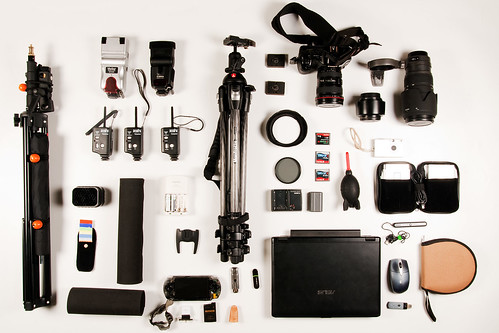
I do not skimp on my gear, and it has definitely paid off. In my opinion, it is better to save up for a longer time and get better equipment, than it is to spend early on something else. Unfortunately, I am addicted to buying new things, which can get very expensive. I could not live without any of this stuff, but if I had to pick one lens, the one that does most of my work is the 18-70mm lens.
Do you have any goals in mind with your photography?
I hope that I will be shooting famous bands very soon. A lot of doing that is getting to know the people who run the events, and the people who manage the bands. So far, the most famous people I have photographed in concert are Kate Voegele, Jack's Mannequin and the rest have been local bands. Currently, I shoot for local newspapers. The pay is not very good, but it is fun and better than nothing at all. Doing this will help me get exposure.
What advice would you give to someone who wants to shoot concerts?
The gear that is best for concert photography, at least in my opinion, is fast lenses and cameras with high ISO abilities. It is deceptively dark inside most music venues. My 50 mm lens does a lot of work there, with its extremely fast 1.8 aperture. My other lenses that go down to aperture 2.8 are extremely important. Large wide-open apertures are important for catching performers in action, without blur. Someone that wants to shoot concerts should definitely invest in a 50 mm lens, and save up to buy other fast lenses. Many places do not allow flash during performances, and your brand-new flash unit will not do any good when security tackles you. Also, watch out for drunken people and mosh pits at shows, which is a good way to wreck your camera.
How did you get a job with your local newspaper? What skills does that require?
When I was doing physical therapy for my tendinitis, I met a photographer who was shooting some photos for a brochure. We got to talking, and she gave me the contact info of a local photo editor. The skill involved in photojournalism is the same most other photographers use, except more irritating. Not only do you have to capture good pictures, but also you have to do it consistently, and make sure you get people's first and last names. If you do not get their names, editors will not use your photos. That can be a big disappointment, after all your hard work. You also have to be versatile and ready for anything. Get to events early and scope things out. that is the best advice I can give. Coming in late and not getting a good spot makes things a lot more difficult.
What advice would you give new photographers?
The best way to learn photography is by doing. When I bought my camera, I barely knew how to use the thing. One great thing I think everyone should do is a Project 365. That is where you take one photo per day (at least) and write a little bit about it on your Flickr account or a photo blog. It will help you learn to shoot in all current situations as well as on days or times where you think a camera might not be convenient to have. Then, at the end of the year, you look back and see how much you have improved, as well as your year in a series of photos. Also, do not forget to take a break when you are post-processing your images. I got a bad case of tendinitis from using the computer too much, and it really puts a kink in your photography.
Where can people see your photography?
Check out my photography on my Flickr site at: http://www.flickr.com/photos/scis/ and soon at www.awesomefarm.com.
Shooting for Stock Photography

photo source
A great way to earn money and learn a lot in the internet is participating in stock photography. Stock photography has been around for a while. And there are a lot of great stock sites that sell photographs for a reasonable price.
Just how and what should you shoot to be able to participate in stock photography?
Photographers say you should start with the concept. But the very first thing you should do is to know your equipment. I literally spent ten times more time trying to know how my camera works than thinking of something to shoot.
Stock photography is a very demanding industry. It's as close as you'll get to professional photography. It requires you to be able to produce images of the highest quality. That is because this industry is very competitive.
Try shooting the same subject with different settings. You should know how your camera reacts with different kinds of light. You should also know how it responds to different levels of illumination. Note the differences you see and keep them in mind.
Next you need a concept. Your images should present an idea, a thought or an expression. Consider a photograph of a man typing on a computer. What is he doing? Why is he typing? Is he working? Is he Blogging? Or just playing?
Designers buy stock images because of the concept they present - not because they look good. Stock photos are used in web sites, brochures, magazines, publications, advertisements, and almost anything that has a print.
So you need to have an image that has a concept that satisfies the needs of the would-be buyers of your pictures.
Then, you need a lot of light. Stock photos require that images have the right level of illumination and contrast. They need to be clear. If you can't afford a big set-up, you can always use desk lamps or even the sun.
You'll also need a computer and two kinds of programs: noise reduction tool and a photo editing application. Most stock photographs go through a noise reduction process. They also get a little tweaking in color, contrast and brightness.
Stock photographs need to be as close to perfect as possible. It's like what they say in the computer graphics industry: "it does not matter how you do it as long as you get the job done." Don't think that editing a photo in your pc is cheating. That only goes for journalism.
The next is pretty simple. You need a stock agency to upload your images to. Or you can showcase your work in your own site. Uploading in stock agencies is better. That is because you can find out where and how to improve. Use their powerful community to find out your weakness and strengths as a photographer.
Then when you have all this, what you need to do next is to be consistent and improve and improve and improve. You need to keep up with the ever demanding industries. If you don't, you'll get left behind.
Saturday, February 26, 2011
Digital Photography Home-Business Opportunities
credit,photo credit
For the next seven years, digital photography is forecasted to remain steady as a job opportunity for those that are interested in this field. While the competition is expected be strong amongst photographers and the demand for jobs will fall below the number of photographers there are expected to emerge in this field.
The most successful photographers exhibit traits in being creative, able to adapt rapidly to technology changes, and management proficiency. There are digital photography business courses available to help you gain the competitive edge. You will be able to start your own full or part-time business when you develop a good business sens and keep up-to-date on the rapidly changing technology.
There are many areas that you can pursue in a digital photography home business. I will cover a few of the areas for digital photography businesses.
Real Estate
Each year there are millions of homes sold in the US and real estate agents use at least one picture to advertise the property online, in magazines, in brochures, and in newspapers. As a digital photographer you could earn $50 to $100 a house working with real estate agents or others involved in real estate.
Portraits
There are many locations that you can use for a photo shoot. Many people like to have a professional portrait done of themselves for various reasons. The common charge for a shoot is $100 per hour and an additional $50 to $100 for prints and enlargements. There is also a strong demand for pet and children's portraits.
Sports
Being a photographer for sporting events can be profitable and exhilarating. As a sports photographer, you can submit your photos to event organizations, to participants and publications, local news agencies, and a variety of other types of news and sporting sites. The local minor league teams could pay $50 to $200 for team photos with extra sales potential for prints, premium items such as photo trading cards, T-shirts, and reprint. Do not forget your local school teams either as there is a hidden potential for a photo shoot for these teams.
Commercials
Every year there are billions of dollars spent on product advertisements. Commercial photography is normally limited to the more experienced photographers who can charges as much as $2,500 a day for high end product shots. There is also an opportunity for those that can also do shoots for the local chamber of commerce for their websites, local businesses for websites, and a wide array of other ways to earn as a commercial photographer.
Glamour
There are many beauty salons, hair dressers, and modeling agencies that use photos to help promote their services and products. While it is not uncommon for them to pay more than $150 an hour for promotional shoots with images that can be used for brochures, online advertising, point of sale materials, and business cards. There is an opportunity for those that wish to have photos of their staff and customers photographed for in house promotions or for conventions.
Stock Photography
There are agencies that specialize in stock photos that they resell to business for promotional purposes. For you to have your work listed with them they normally require a minimum submission of 300 to 500 photographs. As a stock photographer you can submit photos such as travel photos, landscape, people, animals, still life, and various other types of images that will appeal to their customers. The commissions for stock photographers can range from $5 to $100 for images that their customers purchase through their agencies.
News and Events
Many local newspapers, magazines, and newscasts often look for interesting human interest stories and pictures. The requirements for each of the types of periodicals will vary, but it is possible to have your pictures published, receive credit as a tag line, and possibly a payment for your photo.
Wedding Photography
There are photographers who will establish a wedding package of 25 to 40 prints that will retail for $1,500 to $3000. Normally this a type of shoot will take two days to work, the first day is to shoot the event and the second day is to process and prepare the album.
Graduation
There are parents who wish to have a professional photograph took of their graduate walking down the aisle and across the stage at graduation. The charges for photos could range from $5 to $10.
10 Great Tips to Make Any DIY Winter Wedding Photography Successful!
credit
This winter many couples are choosing do it yourself wedding photography in an attempt to save money. Wedding photography is tricky because if not done right there will be no good documentation of the special day. My dad does wedding photography as an amateur hobby; wedding photography is not skill less, but can be done easily with practice by almost any amateur photographer. This article will take a look at 10 tips to make DIY winter wedding photography successful; however keep in mind DIY wedding photography takes copious amounts of editing after the ceremony.
1. Camera
Taking wedding photographs should be done with the right camera, not a regular point and shoot camera. I recommend using the Canon EOS Digital Rebel XTi, it takes high quality pictures and is relatively easy to use. This camera can be found at www.buy.com for $569.95, but you should check to see if anyone in the wedding party can provide this camera or a similar model to save on money.
2. Flash
Relying on the built in pop up flash in any camera is a recipe for failure; you will want to use an external flash for low lighting pictures, such as a church or an evening reception. Winter conditions outside will not require a flash due to the reflection of the snow, but it can be used if done right; however inside you will want a powerful flash. I cannot give a recommendation because certain flashes work for different cameras; therefore the flash will be determined by your digital camera choice. www.ritzcamera.com has a good variety of flashes, lenses, and cameras.
3. Lenses
Unfortunately DIY picture taking is not cheap and requires the proper zoom lenses for great photos from anywhere in the room. Buying any secondary lenses is not necessary, but they will make the pictures better. www.ritzcamera.com has a good selection of lenses; it is where I purchased mine.
4. Go Digital
The hardest part of DIY wedding photography is getting professional looking shots. Going digital allows for touchups on the pictures after they are taken so that they come out perfect. Going digital also saves on prints since all the photos can be saved on a flash drive or a CD.
5. Choose an artistic guest for the job
Capturing the right moment is what photography is all about; having a guest that is willing to take pictures who has an artistic eye is the best way to get quality shots. Do not expect a gift from the photographer as it takes hours of work to take and edit great shots.
6. Be aware of lighting conditions
Winter is the hardest time of the year to take photographs outside due to the reflective nature of snow and the brightness of the sun. Be creative on the angles of your photographs; many high end cameras also show the contrast ratio on the photos taken, look at the contrast to make sure the photos are coming out correctly.
7. Be aware of where the sun is
Do not shoot towards the sun or objects that are in the sun, it can cause shadows and some funky looking pictures. Just be aware of the sun and preview one or two pictures before taking more.
8. Capture photos with the theme
If your theme is a winter wonderland then capture that theme in the photos! Try to include shots of the bridal party and newlyweds in the natural theme of the wedding; also try to include guests in the same theme. Be creative with the shots, you may have to shoot at different angles to get the desired results.
9. Use the flash
Even in snowy conditions you should experiment with the flash for better pictures, the bright the background the more the object you are photographing will stand out. This may not always be the case; therefore you should check the pictures being taken to make sure they are coming out professionally.
10. Edit, Edit, Edit
No DIY photography is complete up completion of the ceremony! There are countless hours of editing that must be taken on to get professional looking results. If you do not have the proper computer skills try to find a guest that would be willing to help edit in exchange for their wedding present.
This site has some extra DIY tips that can help during a winter wedding; I did not cover many these tips, so it may be a good read: http://www.squidoo.com/weddingphotographyguide
Sources:
www.ritzcamera.com
http://www.squidoo.com/weddingphotographyguide, DIY Winter Wedding Photography